 EVERY ORDER SUPPORTS FAMILIES IN NEED



0 comments
There is no single best surgical bur, only the right bur for the job.
The wrong bur can make a routine extraction or osteotomy harder to control. A tooth-sectioning bur, a bone-cutting bur, a longer shank and a trephine each solve a different problem.
This guide covers each by procedure, plus what published research says about bone heat and bur wear. Few studies compare surgical bur designs head to head, so we say where the evidence ends.
Choosing a surgical bur: quick guide
- Impacted wisdom teeth and root sectioning: Zekrya burs (23 mm or 28 mm, 6 helical flutes, FG shank).
- Bone removal, osteotomy and apicoectomy: Lindemann burs. Straight is intended for controlled cutting, cross cut for more aggressive removal in dense bone.
- Deep or hard-to-reach sites: extra long 28 mm surgical burs.
- Bone harvesting: trephine burs.
- Bone heat: in one laboratory test on synthetic bone, fissure burs ran hotter than round and Lindemann burs, and a faster feed rate raised heat in every group.[1]
- Bur wear: a small 2026 laboratory study found changes in surgical carbide fissure burs after repeated use and sterilization. The authors recommended no more than two reuses for the burs tested, but this should not be applied as a universal limit for all surgical burs.[2]

In this guide
Types of surgical burs and what each is for
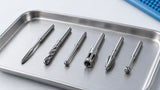
Surgical burs are rotary instruments built mainly for cutting teeth and bone. The table below lists the main types in our dental surgical burs collection and the job each is designed for. For shapes, ISO numbers and shank codes across all burs, see our guide to types of burs in dentistry.
| Bur | Main use | Design notes |
|---|---|---|
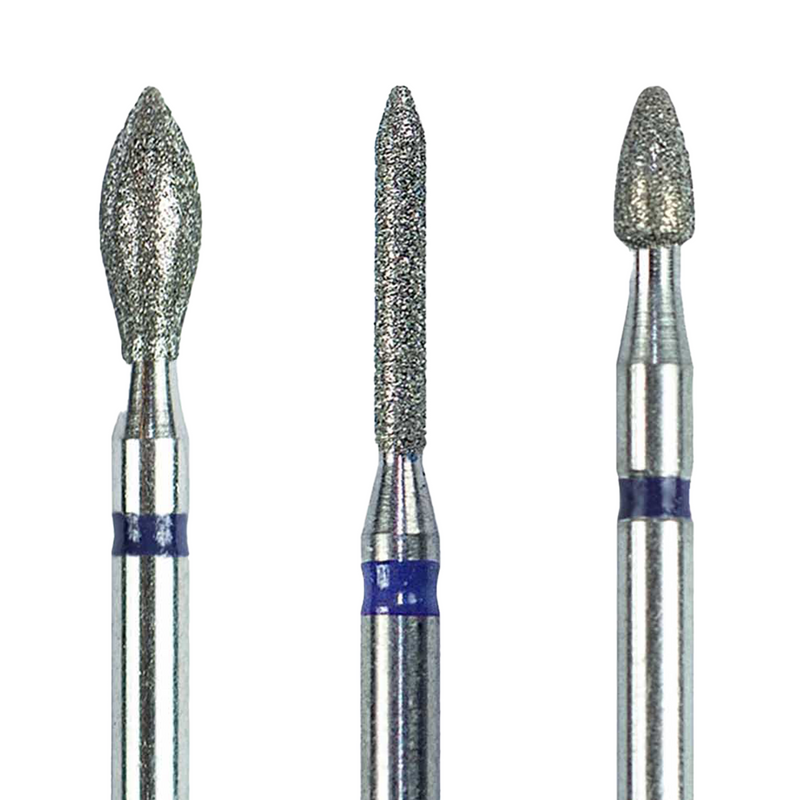
| Lindemann bur | Osteotomy, apicoectomy, cystectomy, bone grafting preparation, bone contouring | One-piece tungsten carbide with spiral flutes designed to carry debris away. Straight (Lindemann161) or cross cut (Lindemann162). FG, RA or HP shank. |
| Zekrya bur | Sectioning impacted wisdom teeth and molars, separating roots, removing broken root stumps | Cutting tip and 6 helical flutes. Head size 016, head length 11 mm, total length 23 mm or 28 mm. FG shank. |
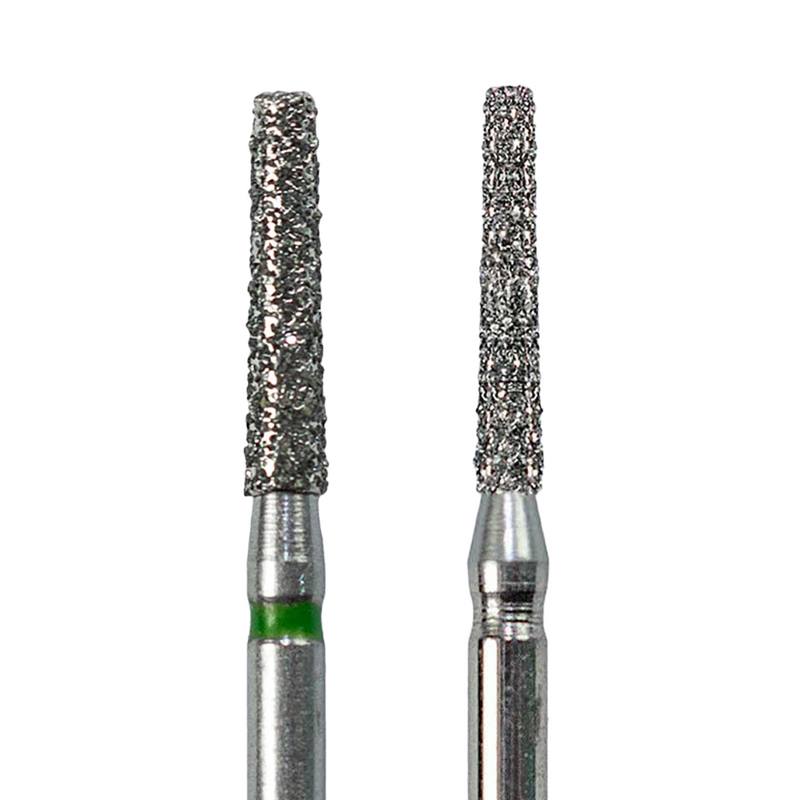
| Cross cut fissure and cross cut tapered fissure burs | Cutting through teeth and crowns | General-purpose carbide burs (557 and 699 types) that are also used in surgical kits. |
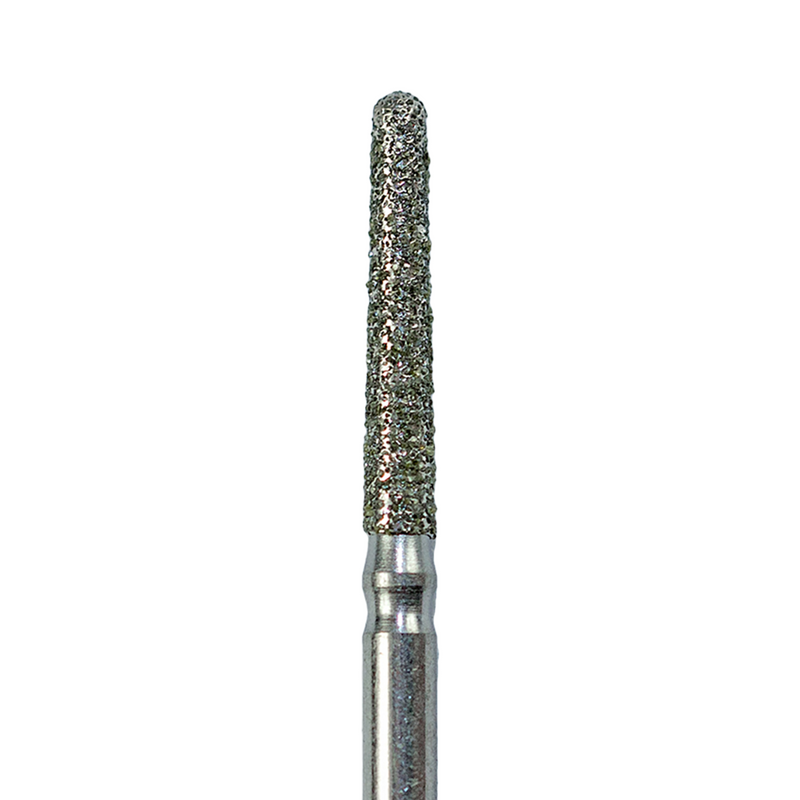
| Extra long surgical diamond bur | Deep or hard-to-reach areas, occlusal reduction, crown and bridge preparation | 28 mm total length, FG shank, 5 burs per pack. |
| Trephine bur | Bone harvesting, implant site preparation, removing bone segments | Hollow cylinder with serrated edges that cuts a circular core of bone. Three diameter ranges (3.0–4.0, 4.0–5.0 and 5.0–6.0 mm), laser depth marks, maximum drilling depth 16 mm. |
| Crown lengthening bur | Removing soft and hard tissue to expose tooth structure | Used in periodontal surgery. See our guide to crown lengthening techniques. |
| Ceramic soft tissue bur | Gingival contouring, gingivectomy, depigmentation | Used without water coolant in the trials; follow the bur’s instructions for use. The clinical trials are reviewed in our article on ceramic bur vs laser vs scalpel. |

How to choose a surgical bur by procedure
Impacted wisdom teeth and tooth sectioning
Sectioning divides the crown and roots so each piece can leave through a smaller space. The Zekrya bur is built for this: a cutting tip and 6 helical flutes that carry debris away from the cut. Zekrya23 and Zekrya28 share the same 016 head size and 11 mm head length. Both use FG shanks, and the overall lengths differ: 23 mm and 28 mm. The longer Zekrya28 gives extra reach in posterior or deep sites, while the shorter Zekrya23 can give better access and control where space is limited. Both lengths can be useful for different access needs. A Lindemann bur may also be used to remove bone around the tooth when indicated.

Does the bur technique itself change patient outcomes? A 2012 systematic review compared the lingual split technique with the surgical bur technique for impacted mandibular third molars. It identified five studies and included four, all small. The limited evidence suggested no clear difference in postoperative pain or swelling, with some evidence of less trismus after lingual split. There was not enough data to draw reliable conclusions about bleeding or infection.[3]
Mandibular fracture is an uncommon complication of third molar removal. A 2011 case report described it as rare, citing previously reported incidences of 0.0034% to 0.0075%.[4] A case report cannot show that a bur caused a fracture or how much risk a particular technique carries.
Bone removal, osteotomy and apicoectomy
The Lindemann bur is a commonly used instrument for bone cutting, osteotomy and bone contouring. The two designs have different intended cutting characteristics:
- Straight (Lindemann161): intended for controlled, less aggressive cutting. Suited to precision shaping, osteotomies and fine adjustments.
- Cross cut (Lindemann162): designed for more aggressive bone removal. Suited to dense bone and tougher work such as cyst removal, root sectioning and larger osteotomies.
The shank sets the handpiece. Our product listings pair FG burs with high-speed handpieces for rapid osteotomies and bone removal, RA burs with low speed for fine shaping and debridement, and HP burs with low to medium speed for a balance of speed and control. Speed limits depend on the instrument and the handpiece, so follow the manufacturer’s operating specifications. For the effect of cutting speed and feed rate on heat, see the research section below.
Deep sites and hard-to-reach areas
When a standard-length bur cannot reach, use a longer shank. The extra long surgical diamond burs are 28 mm long with an FG shank. Zekrya28 gives the same extra length for sectioning.
Bone harvesting and implant site work
A trephine bur is designed to cut a circular core of bone, so it may be used for harvesting bone, removing a bone segment and selected implant site preparation. Pick the diameter range that matches the core you need. We did not find clinical studies comparing trephine burs with other designs, so this choice rests on the instrument’s design.
Gingival tissue and crown lengthening
Soft tissue work uses different burs. For gingival contouring and depigmentation, see the trial evidence for the ceramic soft tissue bur in our comparison with lasers and scalpels. For exposing tooth structure, the crown lengthening burs remove soft and hard tissue.
In the shop: Lindemann burs · Zekrya burs · trephine burs · extra long surgical burs · all dental surgical burs
What research says about bur choice and bone heat
Bone is sensitive to heat. The classic reference is a 1983 vital-microscopic study in the rabbit by Eriksson and Albrektsson, which examined the temperature thresholds for heat-induced bone injury.[5] It is frequently cited in discussions of thermal bone injury, including the commonly reported threshold of approximately 47 °C sustained for one minute. Thermal injury depends on both temperature and exposure time, and this experimental value should not be treated as a universal cutoff for every clinical situation. Adequate irrigation and careful cutting technique help reduce the risk of overheating.
Does the bur itself change how much heat is made? A 2023 laboratory study tested three bur designs on synthetic bone blocks that simulated the mandibular ramus.[1] A CNC milling machine standardized the applied force, and a thermal camera recorded the heat.
| What was tested | What the study found |
|---|---|
| Bur type: round, fissure and Lindemann | The fissure bur groups reached the highest temperatures. Round and Lindemann burs gave similar results.[1] |
| Feed rate: 60 vs 90 mm/min | The higher feed rate significantly increased heat in every group.[1] |
| Speed: 10,000 vs 15,000 rpm | The effect depended on the bur. At 60 mm/min the round bur ran cooler at 15,000 rpm (p = 0.028), the fissure bur ran cooler at 10,000 rpm (p = 0.028), and the Lindemann bur showed no significant difference (p = 0.182).[1] |
The author concluded that bur design affected heat generation and that the bur’s characteristics should guide how it is operated.[1] The study highlights that both bur design and operating conditions influence heat generation. Increasing the feed rate produced more heat across all tested bur types. These findings describe heat generation under controlled laboratory conditions in a synthetic bone model and cannot predict clinical bone temperatures.
Read this with care: the test used synthetic bone, and the abstract gives relative comparisons, not temperatures in degrees. It does not say whether irrigation was used. It shows how burs compare in a controlled setup, and it does not predict clinical bone temperature.
Surgical bur wear and breakage
A worn surgical bur cuts less cleanly and can break. Three sources describe what happens with reuse and with force.
Wear in implant osteotomy burs
A 2012 study tested helical implant osteotomy burs made of steel, tungsten carbide film in a carbon matrix, and zirconia, drilling bovine ribs with up to 40 perforations per bur. Every group lost mass as perforations increased, although the trend was not statistically significant, and electron microscopy showed deformation in all the 2.0 mm burs. The authors state: “The 2.0-mm zirconia burs had a greater loss of substrates and abrasive wear in the cutting area.”[6] These were implant drills in animal bone, not Lindemann or Zekrya burs.
Reuse of surgical carbide fissure burs
A 2026 laboratory study used 15 new surgical fissure carbide burs to cut molar teeth through 1 to 4 cutting and sterilization cycles, then examined them by electron microscopy, confocal laser microscopy and compressive strength testing.[2] Surface roughness changed significantly after the first use. Compressive strength dropped substantially between the second and third reuse, although that change was not statistically significant, and was significantly lower than controls by the fourth cycle. The authors concluded that burs “should not be reused more than 2 times following sterilization” to maintain cutting efficiency and prevent breakage.[2] The recommendation rests on laboratory measurements of surface roughness and compressive strength, not on clinical cutting performance. It is a small single-laboratory study, so treat the number as a signal and not as a rule. Our article on how many uses a diamond bur lasts covers reuse in more depth.
Bur breakage during third molar surgery
Two case reports published in 2020 documented breakage and migration of a high-speed handpiece bur during lower third molar extraction. In one case the fragment migrated into the mandibular body and was found incidentally on a radiograph, and in the other it moved into the floor of the mouth. The authors judged from their form that the burs were steel with tungsten carbide. The authors noted that thin high-speed handpiece burs of this kind are not designed for removing hard cortical bone, and wrote that it was “highly possible that bur breakages were caused by application of inadequate force and/or inadequate instruments” in both cases. Their lessons: select adequate surgical procedures and instruments, and confirm the position of any migrated fragment by imaging.[7] These reports illustrate a potential complication, but they cannot show how often bur breakage occurs.
Limits of the evidence
- Few head-to-head comparisons. In the sources we reviewed, no clinical trial compared surgical bur designs such as Lindemann and Zekrya for patient outcomes.
- Small and older clinical evidence. The systematic review on third molar technique found only small trials, and it dates from 2012.[3]
- Laboratory models. The heat test used synthetic bone,[1] and the wear tests used bovine ribs or extracted teeth.[2][6]
- Case reports. They show that a problem can happen, not how often.[4][7]
- Different products. The studies used other brands and designs, so results may not transfer to every bur.
Before you operate: a surgical bur checklist
These are general considerations. Always follow the manufacturer’s instructions for use and your own clinical judgment.
- Plan from imaging. Use the radiograph or CBCT to locate bone, roots and the nerve before choosing the cut.
- Match the bur to the task. Sectioning teeth, cutting bone, reaching deep sites and harvesting bone each have a different bur.
- Match the shank to the handpiece. FG for high speed, RA for low speed, HP for low to medium speed.
- Irrigate. Use plenty of sterile irrigation, as the Lindemann and Zekrya instructions advise.
- Use controlled cutting pressure. Follow the instrument’s instructions. In one synthetic-bone study, a higher feed rate produced more heat.[1]
- Inspect and replace. Replace the bur when it is damaged or stops cutting cleanly. Case reports have identified force and instrument selection as possible contributing factors to breakage.[7]
Conclusion
The right surgical bur follows the procedure: a Zekrya to section teeth and roots, a Lindemann to cut bone, a longer bur for deep sites and a trephine to harvest bone. The research is thinner than the clinical use. The laboratory studies we reviewed suggest that bur design and operating conditions can change how much heat is made, and that surgical burs wear with reuse. Case reports suggest inadequate force or instruments as possible contributors to breakage. Choose the bur for the task, irrigate, cut with controlled pressure and replace burs that no longer cut cleanly.
Explore Eagle Dental surgical burs
Lindemann, Zekrya, trephine and extra long burs, made in Israel. Free shipping over $250.
Not sure which bur fits your procedure? Contact the Eagle Dental team.
References
- Ayhan M. Evaluation of the temperature values in the use of different types of burs. Medical Records. 2023;5(2):342–348. doi:10.37990/medr.1249118. DOI · Article page
- Nimphiboon N, Chaiyasamut T, Vorakulpipat C. Evaluation of compressive strength and surface roughness of repeated surgical fissure carbide bur. Procedia of Multidisciplinary Research. 2026;4(3). Article page
- Steel B. Lingual split versus surgical bur technique in the extraction of impacted mandibular third molars: a systematic review. Oral Surg Oral Med Oral Pathol Oral Radiol. 2012;114(3):294–302. doi:10.1016/j.tripleo.2011.07.028. PMID 22883979. PubMed · Dental Elf summary
- Cankaya AB, Erdem MA, Cakarer S, Cifter M, Oral CK. Iatrogenic mandibular fracture associated with third molar removal. Int J Med Sci. 2011;8(7):547–553. doi:10.7150/ijms.8.547. DOI · Full text
- Eriksson AR, Albrektsson T. Temperature threshold levels for heat-induced bone tissue injury: a vital-microscopic study in the rabbit. J Prosthet Dent. 1983;50(1):101–107. doi:10.1016/0022-3913(83)90174-9. PMID 6576145. PubMed
- Sartori EM, Shinohara EH, Ponzoni D, Padovan LEM, Valgas L, Golin AL. Evaluation of deformation, mass loss, and roughness of different metal burs after osteotomy for osseointegrated implants. J Oral Maxillofac Surg. 2012;70(11):e608–e621. doi:10.1016/j.joms.2012.07.050. DOI · Repository record
- Matsuda S, Yoshimura H, Yoshida H, Sano K. Breakage and migration of a high-speed dental hand-piece bur during mandibular third molar extraction: two case reports. Medicine (Baltimore). 2020;99(7):e19177. doi:10.1097/MD.0000000000019177. PMID 32049850. DOI · Full text (PMC)


0 comments