 EVERY ORDER SUPPORTS FAMILIES IN NEED



0 comments
A reusable diamond bur is only as safe as the reprocessing behind it.
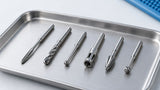
A single use diamond bur (also sold as a disposable diamond bur) is intended for one patient during a single procedure and is then discarded. A sterile single use bur can be opened straight from an intact pack. A reusable diamond bur is cleaned and sterilized between patients, following the manufacturer's instructions for use. Both routes are legitimate.
This guide compares them on contamination, cutting performance, workflow and cost. It leans on two Public Health Ontario evidence briefs that review the available studies, and uses single studies only for specific numbers. We found no meta-analysis comparing single use and reusable diamond burs head to head, so we say where the evidence ends.
Single use vs reusable diamond burs: quick guide
- CDC guidance: a device with no reprocessing instructions should be treated as single use, and burs are among the devices the CDC says may be practical to treat that way because they are hard to clean.[1]
- Cleaning method matters: across 16 studies reviewed by Public Health Ontario, washer-disinfectors cleaned burs best and manual scrubbing worst.[2]
- Reprocessing is not always enough: in some studies, used burs were still contaminated after cleaning and autoclaving.[3][4]
- Cutting: 6 of 8 studies in a second Public Health Ontario review reported reduced cutting efficiency or damage to the cutting surface after repeated cleaning and sterilization. Two found no significant influence of sterilization on cutting efficiency.[5]
- Construction matters: in one study, electroplated diamond burs lost cutting efficiency after 5 autoclave cycles and brazed burs after 10.[6]
- Environment: in the one life cycle assessment we found, reuse had a lower impact when the ultrasonic cleaner and autoclave were loaded well, and the result was mixed or worse at lower loads.[7]

In this guide
What counts as a single use bur
The CDC defines single use (disposable) devices as devices intended for one patient during a single procedure, and not intended to be cleaned, disinfected or sterilized and then used on another patient. If a device has no reprocessing instructions, the CDC says to consider it single use, whatever the label says.[1] Single use describes how a bur is meant to be used. Whether it arrives sterile is a separate point, and the label should say so.
The CDC lists burs among the devices that may be practical to treat as single use, because of how they are constructed. It adds that cleaning and heat sterilization can damage the cutting surfaces and raise the chance of breakage during treatment.[1]
Public Health Ontario draws the same line. Single use burs must not be reprocessed because they have no validated reprocessing instructions, while reusable burs are sold with instructions for cleaning and sterilization. A bur that is not labeled sterile has to be inspected, cleaned and sterilized before its first use.[2]
What the research says
Contamination after cleaning and sterilization
Public Health Ontario screened 401 articles and included 16 experimental studies on how to reprocess dental burs. Used burs commonly carried potential pathogens, including Streptococcus and Staphylococcus species and Candida albicans. Washer-disinfectors were the most effective cleaning method, followed by ultrasonic cleaners, and manual scrubbing was the least effective. Steam sterilization in an autoclave was the most effective sterilization method.[2]
The same review notes a gap: most studies deliberately inoculated burs in the laboratory, and the few that used burs contaminated in clinical use did not always reach sterility.[2] Four studies show the range:
| Study | What was tested | What was found |
|---|---|---|
| Al-Jandan 2016[3] | 40 used and 40 new carbide fissure burs, pre-cleaned, then autoclaved | After a high-pressure cycle, 2 of 40 reused burs (5%) grew bacteria and none of the new burs did. After a low-pressure cycle the result flipped: no growth on reused burs and 1 of 40 new burs (2.5%) positive. |
| Gul 2018[4] | Four groups of 35 used diamond burs, each with a different pre-cleaning method, then steam sterilized | Residual contamination, detected with a dye (a stain for residue, not a culture), on 68.5% to 82.8% of burs depending on the group. The cleaning method made no significant difference (p = 0.57). |
| Morrison and Conrod 2009[8] | Used burs reprocessed with three different protocols (ultrasonic cleaning time and detergent, packaging and sterilizer all differed) | Positive cultures in 15%, 35% and 52% of burs across the three protocols. |
| Hauptman 2006[9] | 100 new burs taken straight from manufacturer packs vs 100 autoclaved inside the pack | 8 of 100 unsterilized new burs grew bacteria, 7 of the 8 from the genus Bacillus. None of the autoclaved burs did.[2] |
The Al-Jandan study tested carbide burs, not diamond burs, and the Gul result shows incomplete cleaning rather than proven surviving microbes. The last row matters for sterile supply. Newly bought burs that are not supplied sterile can also carry microbes: Public Health Ontario reports another study in which 42% of new burs tested as contaminated, which is why such burs need cleaning and sterilization before their first use.[2]
Cutting efficiency after repeated reprocessing
A second Public Health Ontario brief searched three databases for studies from 2000 to June 2023, screened 89 articles and included 8 experimental studies. Six reported reduced cutting efficiency or damage to the cutting surface after repeated cleaning and sterilization (one assessed structural damage only), and two found no significant influence of sterilization on cutting efficiency. The eight studies included carbide burs as well as diamond burs. Electron microscopy showed changes in tip shape and loss of diamond grains that matched the lower cutting efficiency.[5] Wear can still occur when sterilization alone shows no significant effect.
How fast the decline comes depends on how the bur is made. In a study of burs autoclaved 0, 5, 10 or 15 times, electroplated diamond burs lost cutting efficiency significantly after 5 cycles. Brazed diamond burs held up longer and lost it significantly after 10 cycles.[5][6] Another study found that cutting efficiency fell with repeated cuts alone, mostly after the first cut, and that autoclaving, chlorhexidine and gas sterilization made no significant difference to that trend.[5][10]
A 2023 study that reprocessed carbide and diamond burs after real clinical use found structural damage under the electron microscope over five cycles. It did not measure cutting.[5][11]
Read this with care: most of these studies combine repeated cutting with sterilization, so the effect of sterilization alone cannot be separated. None of the cutting studies used a washer-disinfector, and the effect in a clinic is unclear.[5]
Single use vs reusable diamond burs side by side
| Factor | Single use | Reusable |
|---|---|---|
| Before first use | Use straight from an intact pack when it is labeled sterile.[2] | Inspect, clean and sterilize a new bur first unless it is labeled sterile.[2] |
| Between patients | Discard. Do not reprocess.[1][2] | Clean (washer-disinfector most effective, manual scrubbing least), then steam sterilize, following the instructions for use.[2] |
| Contamination risk | No reprocessing step that can fail. | Depends on how well cleaning and sterilization are done. Used burs were not always free of contamination in the studies above.[2][3][4] |
| Cutting performance | Fresh diamond surface for every patient. | 6 of 8 studies reported reduced cutting efficiency or surface damage after repeated reprocessing. The size of the effect depends on the bur.[5] |
| Workflow | Open, use, discard. | Cleaning followed by steam sterilization after every patient.[2] |
| Cost | The price of the disposable bur. | The price of the bur plus the cost, time and materials of reprocessing.[1] |
| Environmental impact | Depends on equipment loading. In one life cycle assessment, reuse had 40% lower impact when the ultrasonic cleaner and autoclave were loaded optimally, and was worse in 8 of 9 impact categories at about one-third load.[7] | |
Cost and environmental impact
The CDC advises comparing the price of the disposable item with the cost, time and materials needed to clean and reprocess the reusable one.[1] That sum depends on your volume, staff time and equipment, so we do not give a per-bur figure here.
The environmental question has one published answer that we found: a life cycle assessment that modeled a single bur reused up to 30 times against 30 disposables. With the ultrasonic cleaner and autoclave loaded optimally, reuse had 40% less environmental impact. At about two-thirds load the result was split, with four impact categories favoring each option. At about one-third load, reuse was worse in eight of nine categories.[7] The authors conclude that improper loading can make reuse worse than disposal. The model covered one bur type, so treat the numbers as an illustration.
How to decide for your practice
- Check the instructions for use. No validated reprocessing instructions means single use.[1][2]
- Check your reprocessing line. Automated cleaning followed by steam sterilization is the combination Public Health Ontario found most effective.[2] If cleaning is inconsistent in your practice, single use takes that step out.
- Count the full cost, not only the price per bur.[1]
- Decide where a fresh diamond surface matters. We found no study showing which procedures benefit most, so this is a clinical judgment.
- If you reuse, follow the manufacturer's limits and inspect each bur for wear or damage before use. The cycle counts above (5 for electroplated, 10 for brazed in one study) are findings from the burs tested, not replacement limits.[6] Our article on how many uses a diamond bur lasts goes deeper.
The two routes can also be mixed: reusable burs with validated instructions for routine work, and single use burs where you want a sterile bur with fresh diamond.
Limits of the evidence
- No head-to-head synthesis. In our search we found no meta-analysis or systematic review comparing single use and reusable diamond burs. The Public Health Ontario briefs are structured reviews of laboratory studies, not pooled statistics.[2][5]
- Bur contamination, not patient infection. The studies measured contamination on burs, not infections in patients.
- Mixed cutting results. Two of eight studies found no significant influence of sterilization, methods differed, and none used a washer-disinfector.[5]
- Small samples and different burs. The Al-Jandan study used 80 carbide fissure burs, not diamond burs.[3] Results differ by brand, construction and method.
- One life cycle assessment. It modeled a single bur type.[7]
Rapid Burs: sterile single use diamond burs from Eagle
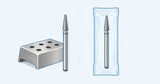
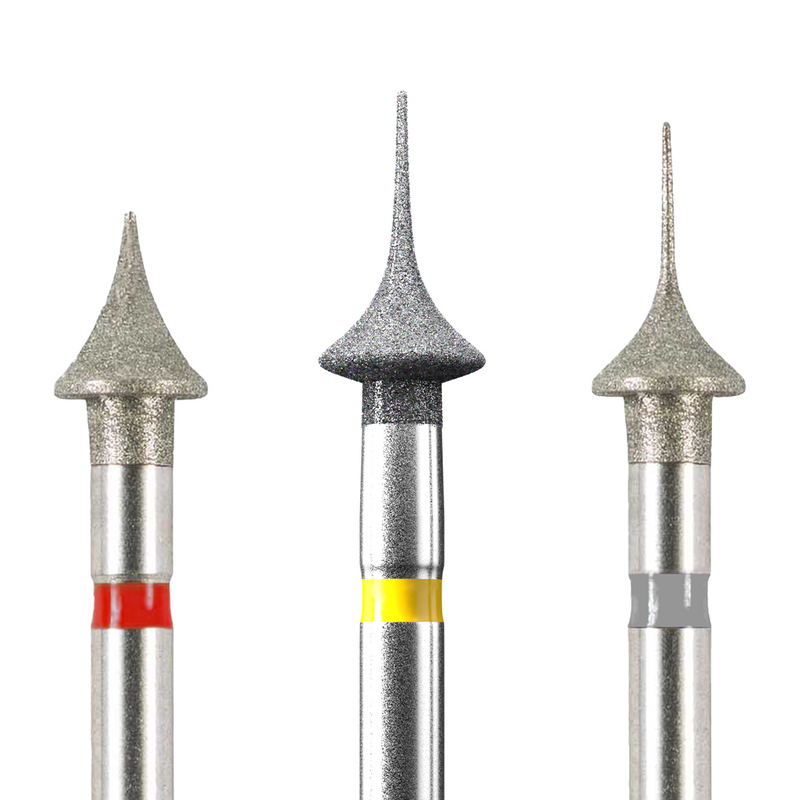
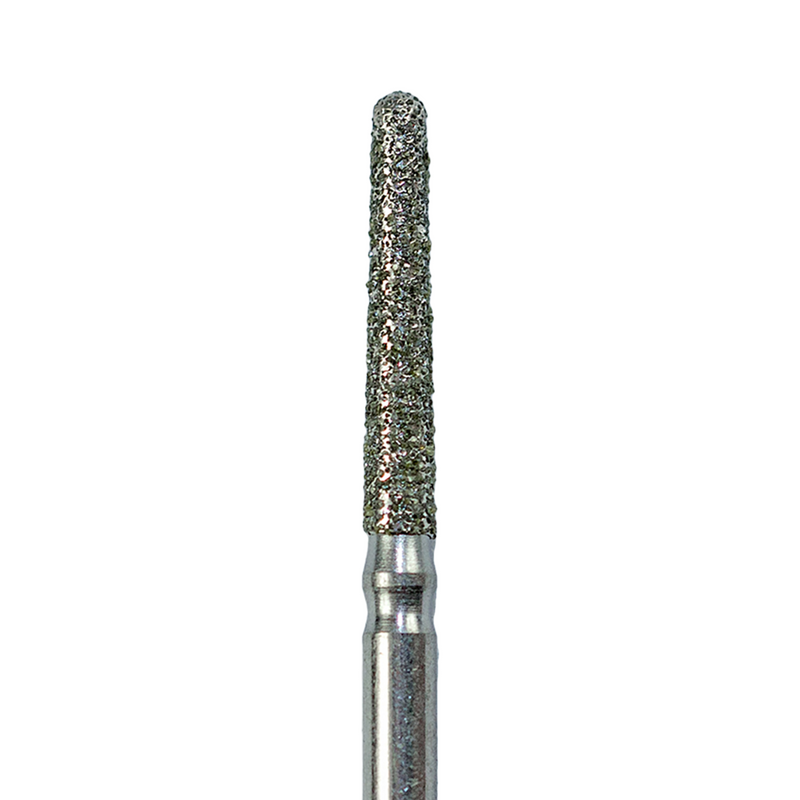
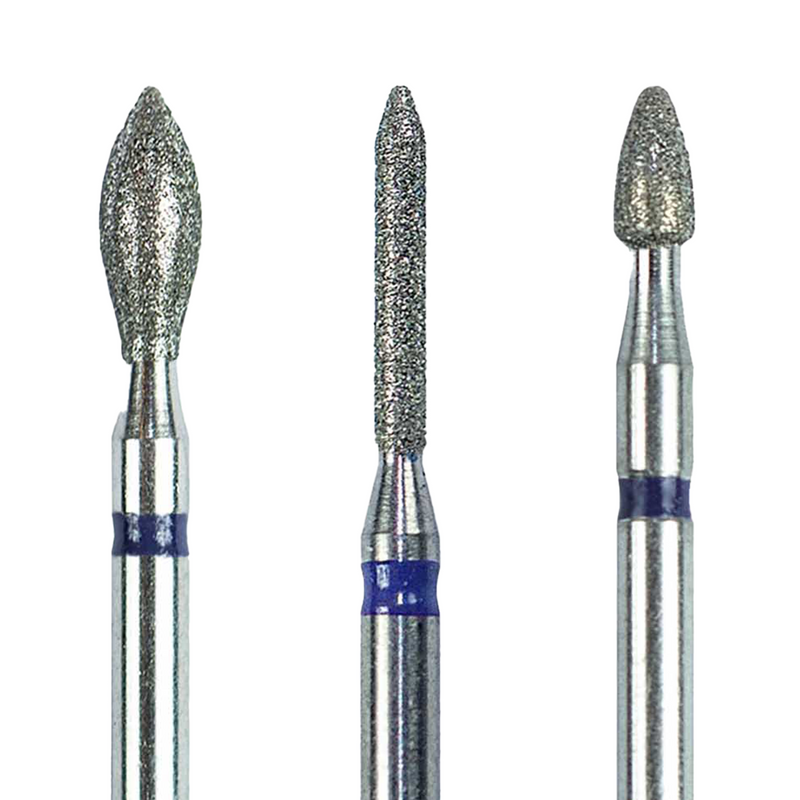
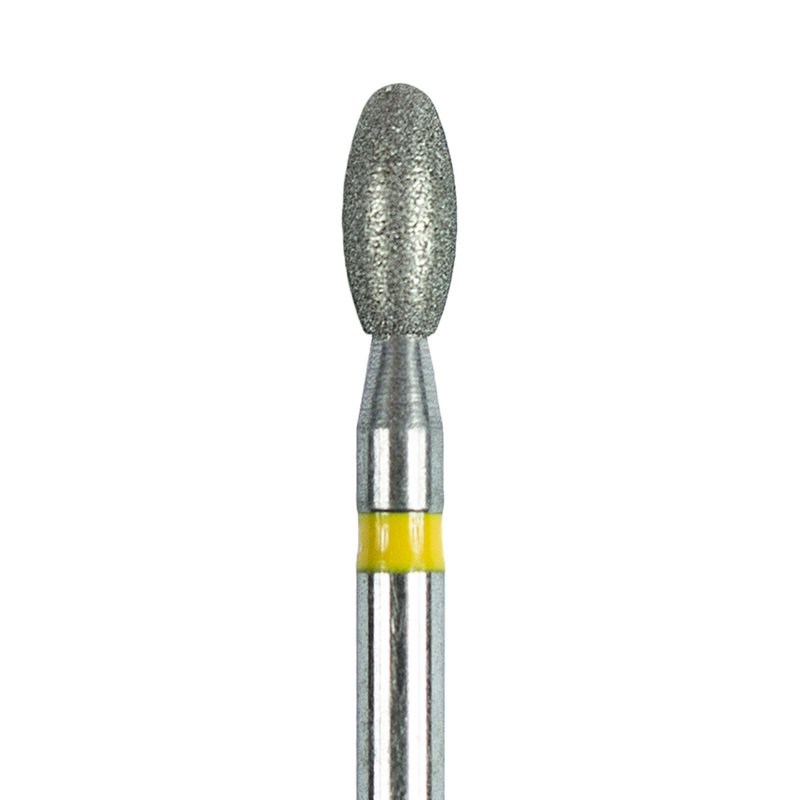
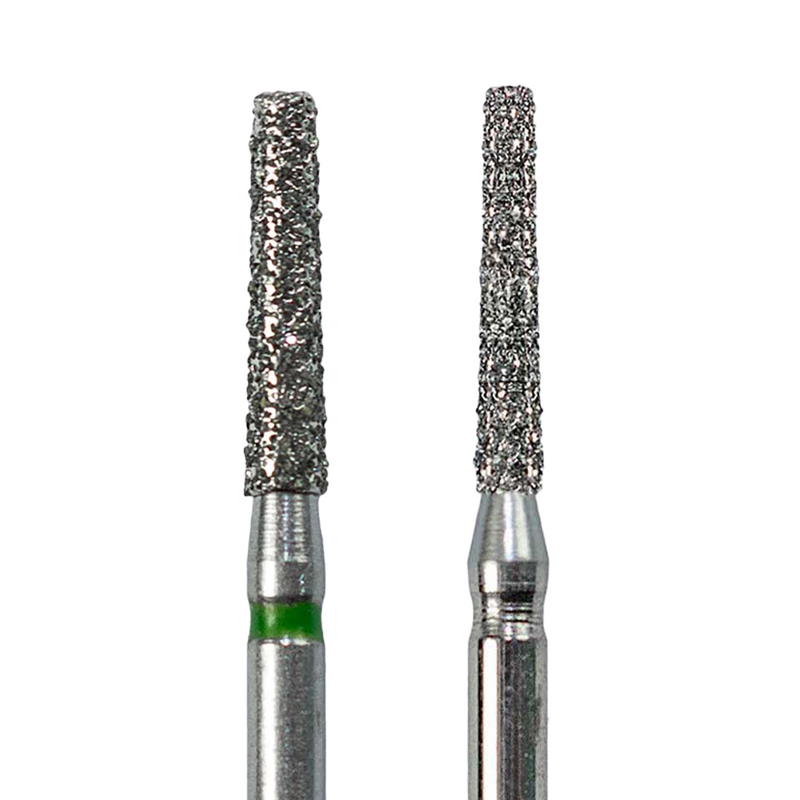
Eagle Rapid Burs are sterile, single use FG diamond burs, individually packed and sold 25 to a pack. The range covers 13 shapes, each with ISO sizes and grits to choose from, so you can open a fresh sterile bur for each patient and have nothing to reprocess. As with any single use bur, do not reprocess them. For the round shape many clinicians call a rose head bur, see Rapid Round Burs.

In the shop: Rapid Burs, single use dental burs · Rapid Round Burs · Rapid Football Burs · Rapid Round End Tapered Burs · Rapid Flame Burs · all diamond burs
For shapes, shanks and grit codes across all burs, see our guide to types of burs in dentistry.
Conclusion
Reusable diamond burs are accepted practice when the manufacturer provides validated instructions and your team follows them. The research shows that results vary widely with the cleaning method, that used burs were not always free of contamination or residue after reprocessing, and that most studies reported reduced cutting efficiency or surface damage with repeated cleaning and sterilization. Single use diamond burs avoid between-patient reprocessing and the wear built up over previous uses, at the price of a disposable bur for every patient, and cutting performance still varies between products. These studies measured contamination and cutting on burs, not infections in patients, so the evidence does not settle which is better for every practice. Match the choice to your instructions for use, your reprocessing line and the full cost.
Shop Eagle Rapid Burs: single use dental burs
Sterile single use diamond burs in 13 shapes, 25 per pack.
Not sure which shape you need? Contact the Eagle Dental team.
References
- Centers for Disease Control and Prevention. Best practices for single-use (disposable) devices. Dental Infection Prevention and Control. Published May 15, 2024. CDC page
- Public Health Ontario. Dental burs - cleaning and sterilization. Evidence brief. Toronto, ON: King's Printer for Ontario; November 2023. PDF
- Al-Jandan BA, Ahmed MG, Al-Khalifa KS, Farooq I. Should surgical burs be used as single-use devices to avoid cross infection? A case-control study. Med Princ Pract. 2016;25(2):159-162. doi:10.1159/000442166. PMID 26535887. DOI · Full text (PMC)
- Gul M, Ghafoor R, Aziz S, Khan FR. Assessment of contamination on sterilised dental burs after being subjected to various pre-cleaning methods. J Pak Med Assoc. 2018;68(8):1188-1192. PMID 30108384. PubMed
- Public Health Ontario. Effect of cleaning and sterilization processes on the cutting efficiency of dental burs. Evidence brief. Toronto, ON: King's Printer for Ontario; December 2023. PDF
- Yu Y, et al. The influence of autoclaving on diamond burs fabricated via different methods. Int J Prosthodont. 2021;34(4):451-457. doi:10.11607/ijp.6231. Findings as reported in reference 5. DOI
- Unger SR, Landis AE. Comparative life cycle assessment of reused versus disposable dental burs. Int J Life Cycle Assess. 2014;19:1623-1631. doi:10.1007/s11367-014-0769-3. DOI
- Morrison A, Conrod S. Dental burs and endodontic files: are routine sterilization procedures effective? J Can Dent Assoc. 2009;75(1). Republished in Tex Dent J. 2010;127:295-300. PMID 20391948. JCDA · PubMed
- Hauptman JM, et al. The sterility of dental burs directly from the manufacturer. J Esthet Restor Dent. 2006;18(5):268-272. doi:10.1111/j.1708-8240.2006.00035.x. Findings as reported in reference 2. DOI
- Bae JH, et al. Changes in the cutting efficiency of different types of dental diamond rotary instrument with repeated cuts and disinfection. J Prosthet Dent. 2014;111(1):64-70. doi:10.1016/j.prosdent.2013.07.002. Findings as reported in reference 5. DOI
- Uchoa-Junior FA, et al. Biofilm on and structural damage of rotary cutting instruments after 5 cycles of clinical use and processing. J Am Dent Assoc. 2023;154(6):495-506. doi:10.1016/j.adaj.2023.03.005. Findings as reported in reference 5. DOI


0 comments