EVERY ORDER SUPPORTS FAMILIES IN NEED



Diamond Plaster Cut Discs - Swiss made
Related products
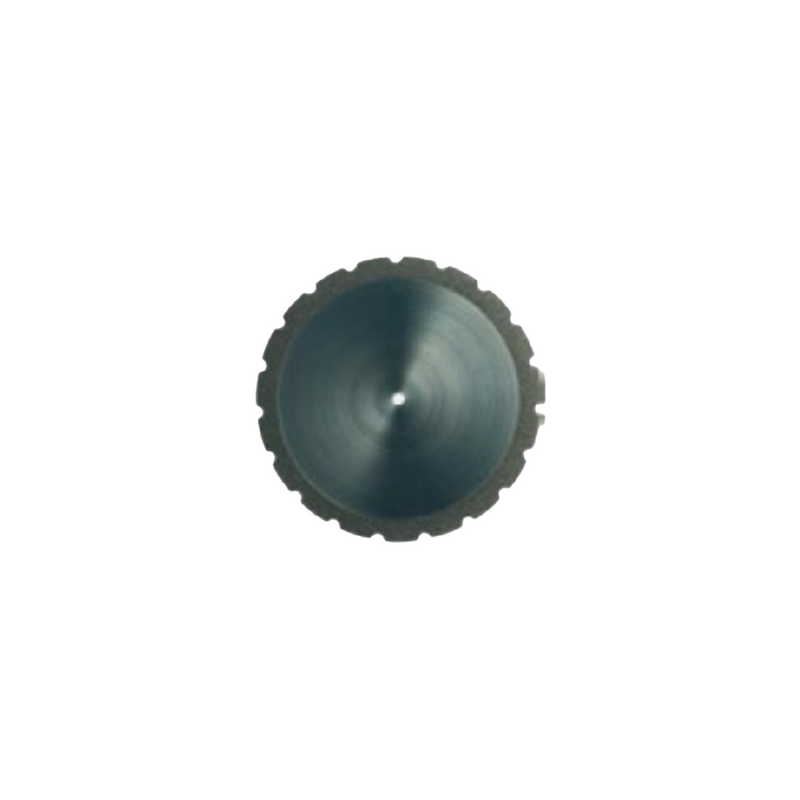
A dedicated diamond disc for plaster models
The Eagle Diamond Plaster Cut Disc (D368-400-28F) is a 40 mm plaster cutting disc for the dental lab. It is designed for the fabrication, contouring and shaping of dental materials, namely plaster and synthetic resins, which makes it the disc to reach for when you need to section a model, trim excess base material or cut through resin model work.
The disc is factory mounted on a 2.35 mm shank mandrel to ensure concentricity, individually packed and color coded for easy identification.
Specifications
| Specification | Value |
|---|---|
| Catalog number | D368-400-28F |
| Diameter | 40 mm |
| Thickness | 0.28 mm |
| Grit | Fine |
| Sides | Double-sided |
| Shank | 2.35 mm HP mandrel, factory mounted |
| Recommended speed | 20,000 RPM |
| Packaging | Individually packed, color coded |
Why a 40 mm model cutting disc?
Most separating discs are around 19 to 22 mm across. At 40 mm, this disc gives you roughly twice the diameter, so it reaches deeper into a model and gets through thick bases in fewer passes. The 0.28 mm thickness makes it a stiff disc that holds its line on longer cuts, and the fine grit leaves a clean cut face that needs little cleanup. Because it is double-sided, both faces of the disc carry diamond, so you can trim on either side of the cut.
Typical uses include:
- Sectioning plaster and stone models
- Trimming bases and removing excess plaster
- Cutting synthetic resin models and model components
- Opening up access on a model before finer work with smaller discs or burs
Disc or model trimmer?
A model trimmer is the right tool for shaping the outside of a model base, but it can't make cuts inside the model. A plaster cutting disc in a handpiece lets you section between teeth, separate segments, cut away undercuts and reach areas a trimmer wheel can't get to. Many technicians use both: the trimmer for the base outline and the disc for every cut that needs precision or access. Keeping a dedicated disc for model work also means your thin separating discs stay sharp for restorations instead of being worn down by plaster.
Technique for clean cuts
Run the disc at the recommended 20,000 RPM and let it reach speed before contact. Guide it with light, steady pressure and keep it in a straight plane; a disc that is twisted or levered in the cut can bind, bend or break. For deep cuts, work in several shallow passes rather than one forced plunge.
Let plaster models set and dry fully before cutting. Soft or damp plaster tends to load the diamond surface and slow the cut, while a fully set model cuts cleanly and leaves a crisp edge. Brace the model on the bench or in your hand so it can't shift when the disc breaks through.
Safety
Cutting plaster and resin produces fine dust. Work with dust extraction, wear eye protection and a suitable mask, and keep your fingers out of the plane of the disc. A 40 mm disc carries more of its edge away from the mandrel than a small disc, so check it before every session and never use a disc that is bent, chipped or cracked, or that wobbles when running.
Care and storage
After each session, brush plaster and resin debris off both faces with a soft brush so the diamond keeps cutting freely. Store the disc in its individual pack to protect the edge from knocks. When it needs noticeably more pressure to cut, replace it rather than forcing it.
Need a thinner disc?
For separating restorations, shaping ceramic contours or cutting temporaries, choose one of our thin Super Flex diamond discs from 0.17 mm. For the rest of your bench, see our full range of dental lab burs.
Ready to Subscribe?