EVERY ORDER SUPPORTS FAMILIES IN NEED



Cross Cut Tapered Fissure Burs
Related products
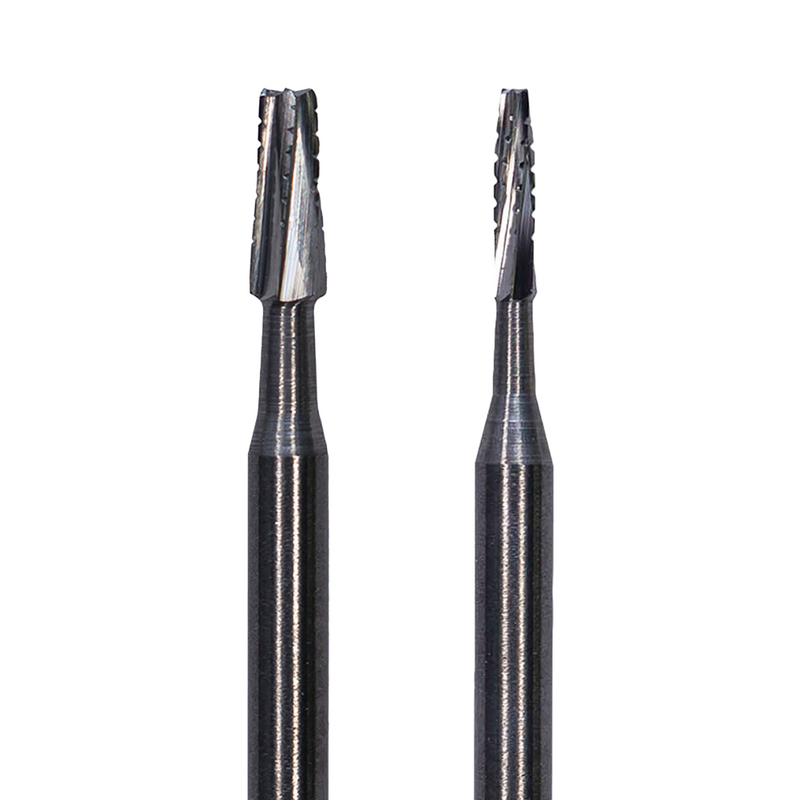
Eagle cross cut tapered fissure burs are one-piece tungsten carbide burs with 6 cross-cut blades, a tapered head and a flat end. The range covers the classic sizes 699, 700, 701, 702 and 703 on an FG (friction grip) shank for high-speed handpieces, plus a 702 on an HP shank for straight handpieces. Every pack holds 5 burs of one size, made in Israel.
Sizes at a glance
| Bur | Head size / length | Best for |
|---|---|---|
| 699 FG | 009 (0.9 mm) / 4 mm | Fine grooves, narrow cuts, small inlay boxes |
| 700 FG | 010 (1.0 mm) / 4 mm | Slots, retention grooves, precise sectioning |
| 701 FG | 012 (1.2 mm) / 4.5 mm | All-round crown and tooth sectioning |
| 702 FG | 016 (1.6 mm) / 4.5 mm | Faster bulk removal, wider cuts, root sectioning |
| 702 HP | 016 (1.6 mm) / 4.5 mm | Straight handpiece: bone and lab work |
| 703 FG | 021 (2.1 mm) / 5 mm | Heavy reduction and large sectioning cuts |
What is a cross cut tapered fissure bur used for?
The tapered head cuts walls that diverge toward the occlusal surface, and the flat end leaves a clean, flat floor. The cross cuts split each blade into short segments, so the bur bites faster and clears chips better than a plain-cut tapered fissure bur. That combination is why the 701 and 702 are the go-to surgical burs for sectioning. Typical uses:
- Sectioning multi-rooted teeth and roots before surgical extraction
- Sectioning and removing old crowns, bridges and metal restorations
- Inlay and onlay preparations with divergent walls and a flat floor
- Removing old amalgam and composite fillings
- Endodontic access through existing metal restorations
- Bone cutting and trimming in oral surgery
Choosing between 701, 702 and 703
The 701 bur is the most common choice for crown sectioning and splitting molars: its 1.2 mm head is narrow enough for a controlled cut but strong enough to go through metal. The 702 surgical bur has a 1.6 mm head and removes more material per pass, so many surgeons prefer it for root sectioning and bone work. The 703 bur is the largest size, used when a wide, fast cut matters more than precision. The 699 and 700 are fine sizes for grooves, slots and small preparations where you want to remove as little tooth structure as possible.
How to use cross cut tapered fissure burs
- Pick the size for the job: 699 or 700 for narrow cuts, 701 for most sectioning, 702 or 703 for faster bulk removal.
- Seat the bur fully in the chuck and check that it runs true without wobble before touching the tooth.
- Use plenty of water spray. FG burs run at high speed, and heat builds up quickly in tooth, bone and metal. For the HP 702 in bone, irrigate with sterile saline.
- Apply light, steady pressure and let the cross-cut blades do the work. Forcing the bur causes chatter and can break it.
- Cut in short strokes along the planned line, keeping the bur angle constant so the walls stay tapered.
- When sectioning a crown, cut from the gingival margin toward the occlusal surface on the buccal side, then split the crown with an elevator or crown spreader instead of prying with the bur.
Cross cut tapered vs. straight and plain-cut fissure burs
- Tapered vs. straight: tapered burs (699–703) give divergent walls and a narrower tip, which helps in inlay preparations and tight sectioning. Straight cross cut fissure burs (556, 557, 558) give parallel walls and a wider tip.
- Cross cut vs. plain cut: cross-cut blades remove material faster and clog less. Plain-cut blades leave a smoother wall but cut more slowly, so they suit finishing more than sectioning.
- Carbide vs. diamond: carbide burs cut metal, amalgam, dentin and bone efficiently with a clean, chip-forming action. Diamond burs grind rather than cut and are better for enamel, porcelain and zirconia.
- FG vs. HP: the FG shank fits high-speed handpieces for chairside work. The HP shank fits straight handpieces used at lower speed for bone, lab trimming and surgical cases.
Tips for longer bur life
- Don't use a carbide bur on zirconia or thick porcelain. Cut through the ceramic with a diamond first, then switch to carbide for the metal or core underneath.
- Avoid levering or bending the bur sideways when sectioning. Carbide is hard but brittle.
- Keep separate burs for metal cutting and for tooth structure. Metal dulls the blades faster.
- Replace the bur as soon as it starts to cut slowly or produce more heat. A dull bur needs more pressure, which raises the risk of breakage.
Material, cleaning and sterilization
Each bur is made from one piece of tungsten carbide, so there is no joint between head and shank that can separate. After use, remove debris with a bur brush or an ultrasonic bath, rinse, dry and autoclave. Store the burs dry in a bur block so the cutting edges don't knock against each other. For other shapes, sizes and shanks, browse the full range of carbide burs.
Ready to Subscribe?