EVERY ORDER SUPPORTS FAMILIES IN NEED



EVE Diapol Porcelain Polishers - HP
Related products
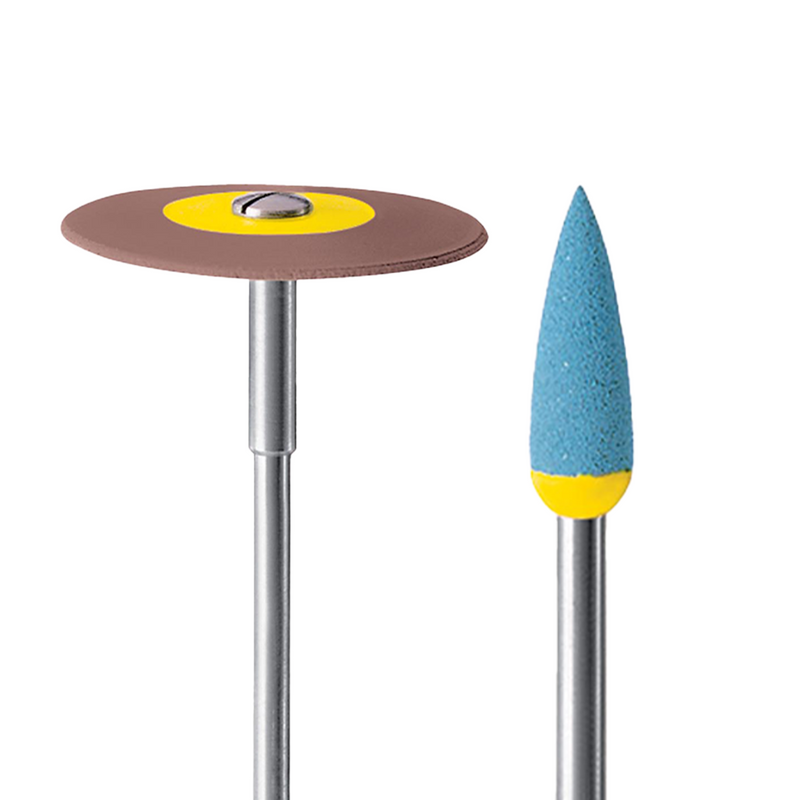
Porcelain Polishing Wheels and Points for the Lab
EVE Diapol HP polishers are diamond-impregnated rubber polishers for porcelain and feldspathic ceramic restorations, made with an HP (straight handpiece) shank for bench and extraoral work. After you grind and contour a crown or bridge, they take the surface back to a smooth, high-luster shine in seconds, without sending the piece through another glaze firing.
That makes them useful for final finishing in the dental lab, for minor corrections after a try-in, and for any porcelain polishing you prefer to do outside the mouth with a lab handpiece or micromotor.
Shapes and Sizes
The HP line comes in three shapes, and each shape is offered in coarse (C), medium (M) and fine (F). The last letter of the catalog number is the grit, so RDHP26M is the large wheel in medium grit. Sizes below come from the product chart on this page.
| Cat. No. | Shape | Size (mm) |
|---|---|---|
| RDHP26 C/M/F | Large wheel | 26 x 2 |
| RDHP17 C/M/F | Wheel | 17 x 2.5 |
| RDHP2 C/M/F | Point | 4 x 13 |
How to pick a shape: the 26 mm large wheel covers broad buccal and labial surfaces quickly and works well on bridges and larger units. The 17 mm wheel gives you more control on single crowns and smaller surfaces. The point reaches occlusal anatomy, fissures, line angles and the areas a wheel cannot get into.
Grit Sequence: Coarse, Medium, Fine
Ceramic polishing works best as a sequence. Each grit removes the scratch pattern of the step before it, so the fine polisher only has to bring up the final shine.
| Step | Grit | Color |
|---|---|---|
| 1. Smooth | Coarse (C) | Blue |
| 2. Pre-polish | Medium (M) | Pink |
| 3. High gloss | Fine (F) | Gray |
Jumping from a coarse grinder straight to a fine polisher usually means chasing a shine that never fully comes up, because the deeper marks are still there. Going coarse, then medium, then fine gets you to the final finish faster and with fewer passes overall.
Speed, Pressure and Heat
- Speed: run the polishers at a moderate, controlled speed, not at the top of your handpiece's range. Too much speed builds heat and can glaze over the diamond content instead of letting it cut into the ceramic.
- Pressure: use light pressure and let the diamond abrasive work.
- Movement: keep the polisher moving across the restoration instead of holding it in one spot. You get a more even gloss and the polisher lasts longer.
- Heat: work in short passes so the ceramic does not overheat.
Step-by-Step Lab Polishing
- Finish grinding and contouring with your ceramic grinder, ending on the finest grinder grit you use.
- Choose a shape: large wheel for broad surfaces, 17 mm wheel for single units, point for anatomy.
- Polish with the coarse (blue) polisher until the grinding marks are gone.
- Switch to the medium (pink) polisher and refine the surface.
- Finish with the fine (gray) polisher for the final high-luster shine.
- Check contacts and margins before the case leaves the bench.
Polishing Instead of Re-Glazing
A glaze firing adds time to every case and puts the ceramic through another firing cycle. A well-run diamond polishing sequence can bring porcelain to a comparable shine without that extra step. This is especially handy for small corrections after a try-in, where a full re-glaze is not practical. It will not replace glazing in every situation, but for routine adjustment and finishing work it is the faster path.
Choosing the Right HP Polisher
This page covers the HP wheels and points for porcelain. If you need a spiral polisher that adapts to contacts and embrasures on crown and bridge work, see the EVE Diapol TWIST HP spiral polishers. If you are working with lithium disilicate (E.max) instead of porcelain, the EVE Diapro HP lithium disilicate polishers are made for that material. For chairside polishing in the mouth, the same Diapol system is also offered with an RA latch shank.
Ready to Subscribe?