EVERY ORDER SUPPORTS FAMILIES IN NEED



IPR burs
465-031
0.3
5
20
Related products
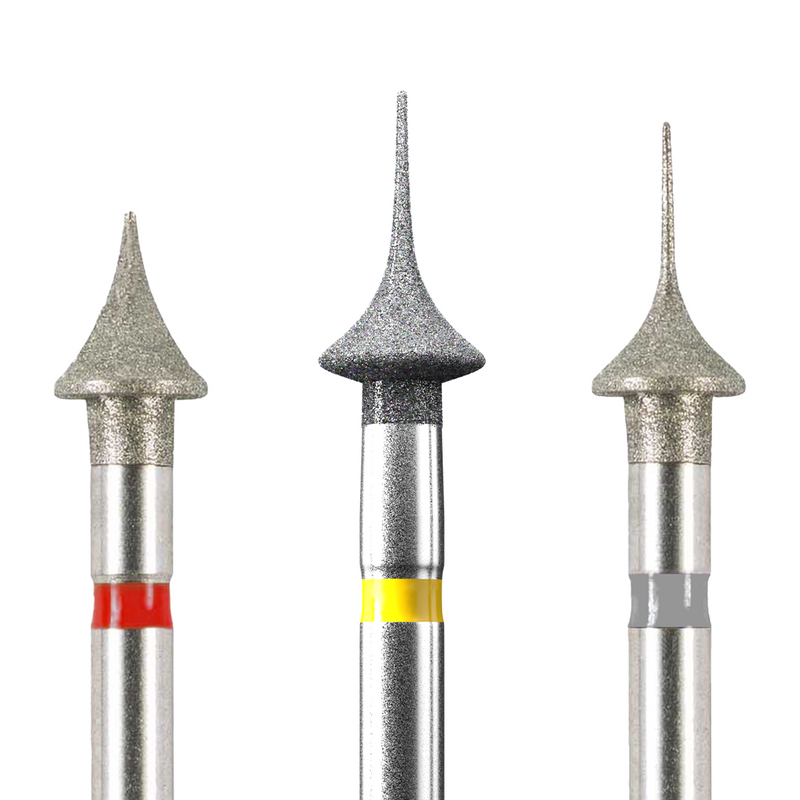
Eagle IPR Burs - Diamond Interproximal Reduction Burs, 0.3–0.65 mm
Eagle IPR burs are diamond interproximal reduction burs made for controlled enamel stripping in aligner and fixed orthodontic cases. Four profiles - J316, Z12S, E11S and the J313 finisher - in eight sizes and grits, sold in packs of 5, autoclavable and reusable. Available singly, as the 40-bur pack, or in the IPR Kit and Ortho IPR Kit.
Standard needle and mosquito burs make you work perpendicular to the tooth: awkward angle, poor sightline, and reduction concentrated at the bur tip. Eagle interproximal burs are shaped to work parallel to the long axis - a natural finger rest, a clear view of the contact, and uniform reduction along the full proximal surface. That is what modern aligner workflows, prescribing IPR in 0.1 mm increments, demand.
Made in Israel. Rated Excellent on Trustpilot. Express delivery worldwide, 100% satisfaction guarantee.
IPR Bur Sizes and Profiles
| Profile | Grit | Diameter (tip–max) | Head / total length | ISO | Use |
|---|---|---|---|---|---|
| J316/SF | Super fine (yellow) | 0.30 mm | 5 / 20 mm | 833-031 | Anterior IPR. Two-part head slices and re-contours in one bur |
| J316/PF | Fine (blue) | 0.40 mm | 5 / 20 mm | 833-031 | Anterior IPR, 0.4 mm prescriptions; zirconia and ceramic |
| J316/M | Medium (green) | 0.50 mm | 5 / 20 mm | 833-031 | Anterior IPR, larger reductions and Bolton corrections |
| Z12S/SF | Super fine (yellow) | 0.20–0.45 mm | 3.4 / 22 mm | 165-005 | Staged aligner IPR without separation - the Invisalign workhorse |
| Z12S/PF | Fine (blue) | 0.30–0.50 mm | 3.4 / 22 mm | 165-005 | Aligner and fixed cases needing up to 0.5 mm per contact |
| E11S/SF | Super fine (yellow) | 0.20–0.55 mm | 7 / 23.5 mm | 164-005 | Vertical IPR parallel to the tooth axis; extended head for tight posterior contacts |
| E11S/PF | Fine (blue) | 0.30–0.65 mm | 7 / 23.5 mm | 164-005 | Posterior IPR, larger reductions |
| J313/F | Fine (red) | 031 head | 3.5 / 19 mm | 466-031 | Post-IPR finishing: smooths the proximal surface, reduces sensitivity |
All burs: FG shank, electroplated diamond coating on a hardened core, 5 burs per pack. The J316 anterior profile was described in the Journal of Orthodontics (Har-Zion, 2025) as a design that performs anterior IPR effectively and safely while avoiding the discomfort of traditional methods.
IPR bur sizes by case:
- 0.2 mm to 0.3 mm - light, ultra-precise enamel reduction and staged aligner IPR (Z12S/SF tip, J316/SF)
- 0.4 mm to 0.45 mm - the standard sizes for everyday spacing (J316/PF, Z12S/SF max)
- 0.5 mm to 0.65 mm - larger reductions, posterior contacts and Bolton corrections (J316/M, Z12S/PF, E11S)
Colour-coded grit levels:
- Yellow band (super fine, SF) - controlled, precise enamel reduction; the standard IPR grit
- Blue band (fine, PF) - faster reduction, and the grit to use on zirconia and ceramic
- Green band (medium, M) - J316 only, 0.5 mm anterior reductions
- Red band (fine, J313) - final smoothing and polishing of the enamel surface after IPR
Available Options
- Single packs - 5 burs of one profile and size. Start with the J316 and Z12S if you mainly do aligner cases.
- 40-bur pack (5 of each) - all eight profiles and sizes. The clinic stock option, priced below eight single packs.
- IPR Kit - 6 IPR burs + 1 stripping bur in an autoclavable block. One of each size, ready on the tray.
- Advanced IPR Kit (Ortho IPR Kit) - the IPR Kit plus 5 carbide debonding burs and 2 polishers for attachment and adhesive removal.
- StripFix Kit - manual IPR saw system for clinicians who finish or verify with strips.
- MEGA Discount Bundle - Ortho IPR Kit, StripFix set, 60 IPR burs, 40 mosquito burs, 2 IPR discs and an IPR gauge set. Everything for an IPR-heavy practice in one order.
IPR Burs for Invisalign and Clear Aligners
ClinCheck and other aligner planning software prescribe IPR in 0.1 mm increments, and the range is built around that: J316 for 0.3, 0.4 and 0.5 mm anterior contacts, Z12S tapered to 0.45–0.50 mm for staged reduction without separation, E11S tapered to 0.55–0.65 mm for posterior contacts where visibility is the problem. Verify each reduction with an IPR gauge before moving to the next contact.
A few clinical notes: IPR is best performed once teeth show some mobility during active treatment, typically after several weeks of aligner wear or bracket bonding. Avoid IPR on overlapping teeth - the contact geometry makes uneven reduction likely; align first, then reduce. Always use ample water to limit heat and protect the pulp.
Why Work Parallel to the Long Axis
Strips and discs give controlled reduction but poor visibility, patient discomfort and a real risk to soft tissue. Standard diamond burs are more comfortable but force a perpendicular approach - unstable hand position, limited view, and reduction concentrated at the narrow tip, so results drift uneven. Eagle IPR burs are shaped for the parallel approach: stable finger rest, full sight of the contact, and enamel removed evenly along the whole proximal surface. The specialised diamond coating strips enamel smoothly enough to protect the patient and precisely enough to match the increments your software prescribes, in anteriors and posteriors alike.
Why Dentists Use IPR Burs - Clinical Applications
Eagle IPR burs are designed for the precise and efficient slenderization and contouring of teeth in orthodontics. They help improve alignment, proportions and aesthetics.
- Crowding - IPR burs efficiently resolve crowding by creating space for tooth movement, ensuring an optimal fit and predictable outcomes for clear aligners.
- Black triangles - IPR burs help reduce or eliminate black triangles by reshaping proximal contacts.
- Crown proportions - IPR burs balance tooth proportions and correct Bolton discrepancies, ensuring seamless alignment between the upper and lower arches.
- Restorative and aesthetic contouring - contact point and emergence profile refinement.
How to Use Eagle IPR Burs
- Open the contact. Place a wooden wedge to tip the teeth slightly apart and protect the gingiva. This opens the contact for the bur and gives a more uniform result.
- Start from the lingual side. Contact points usually sit toward the lingual; starting there keeps the reduction where the plan wants it.
- Set the angle at low RPM, parallel to the long axis, then increase to maximum speed.
- Light, continuous strokes with ample water. If you feel resistance, switch to short push-stop motions. Never force the bur.
- One contact at a time. Remove the wedge, measure with the gauge, record the reduction, then move on.
- Finish with the J313 or a fine strip. A polished proximal surface holds less plaque and gives the patient less sensitivity.
Tips From Clinicians
Collected from published clinical guides and orthodontists who perform IPR daily:
- Check that the contact is fully open before you measure. The resistance drops and the papilla blanches slightly. Then gauge - not before.
- Keep proximal surfaces parallel. Flared burs remove more incisally than gingivally and leave a contact wider at the top. The E11S gives the same reduction whether held vertically or horizontally.
- Ledging comes from rushing. Rigid burs and discs pushed into a closed contact are the usual cause. Wedge first, then let the bur cut.
- Make the tooth a smaller version of itself. After reduction, contour the line angles so the tooth keeps its natural shape. The two-part J316 does this in the same pass.
- Posterior IPR is different. Less visibility, wider crowns, contact further back. Use the 7 mm head of the E11S and work from the lingual, one contact at a time.
- Always polish. Burs leave a rougher surface than strips; studies comparing IPR methods with and without polishing consistently show a smoother, less plaque-retentive enamel surface after finishing. That is what the J313 is for.
- Floss or explorer check after each contact to catch any ledge before the next aligner goes in.
- Replace a bur when it grabs. A dulled diamond starts to chatter instead of cut - that is when heat and uneven surfaces happen.
Eagle IPR Burs vs Komet, Mr Bur and Strauss
| Eagle IPR burs | Typical alternative | |
|---|---|---|
| Profiles | J316, Z12S, E11S + J313 finisher; 8 sizes/grits | 1–3 profiles, often generic needle or mosquito |
| Approach | Parallel to the long axis | Perpendicular |
| Diameter range | 0.20–0.65 mm, tapered and constant options | Varies |
| Pack | 5 burs, $79.90; 40-pack $599.90 | - |
| Ordering | Direct from manufacturer, ships within 24 h | Via dealer |
| Guarantee | 100% satisfaction, free exchange | - |
Clinicians comparing Komet IPR burs, Mr Bur IPR burs or Strauss IPR burs get the same clinical profiles here - bought directly, shipped express, and backed by a guarantee.
Why Eagle Dental IPR Burs
- Precision engineered - specialised diamond coating for controlled, uniform reduction down to 0.1 mm
- Reusable and durable - hardened core outlasts standard diamond burs
- Wide range - four profiles, eight sizes and grits, kits and bundles for every IPR case
- Rated Excellent on Trustpilot - verified reviews from orthodontists and dentists worldwide
- Express worldwide delivery - most orders arrive in 2–3 business days; free shipping over $250
- 100% satisfaction guarantee - if you're not happy, we'll make it right
Recent Trustpilot IPR Reviews
🇺🇸 Dr. Chris: "The burs are excellent. The IPR was fast and accurate. It was waaaaay better than interproximal files."
🇺🇸 Dr. Nama: "Great burs !! The kits are very easy to use. Made my life of IPR very easy"
🇺🇸 Dr. Wong: "Best IPR burs fast shipping, good ipr burs"
🇬🇧 Dr. OG: "Great ipr burs Easy to order, fast delivery Excellent product"
🇬🇧 Dr. Collins: "These are fantastic burs, which make IPR substantially easier, more predictable… and much, much quicker. Ordering is easy on the website, and delivery is prompt - really can't fault the service!"
🇮🇪 Dr. Danaher: "Really great. Excellent burs which have really simplified my IPR techniques and give patients better outcomes"
View all reviews on Trustpilot
More IPR Tools
Complete the setup: IPR discs for wide posterior contacts, IPR strips for finishing and verification, the IPR gauge to confirm every reduction, and our guide to interproximal reduction techniques for protocol and sequencing.
Ready to Subscribe?