EVERY ORDER SUPPORTS FAMILIES IN NEED



Super Flex Diamond Discs
Related products
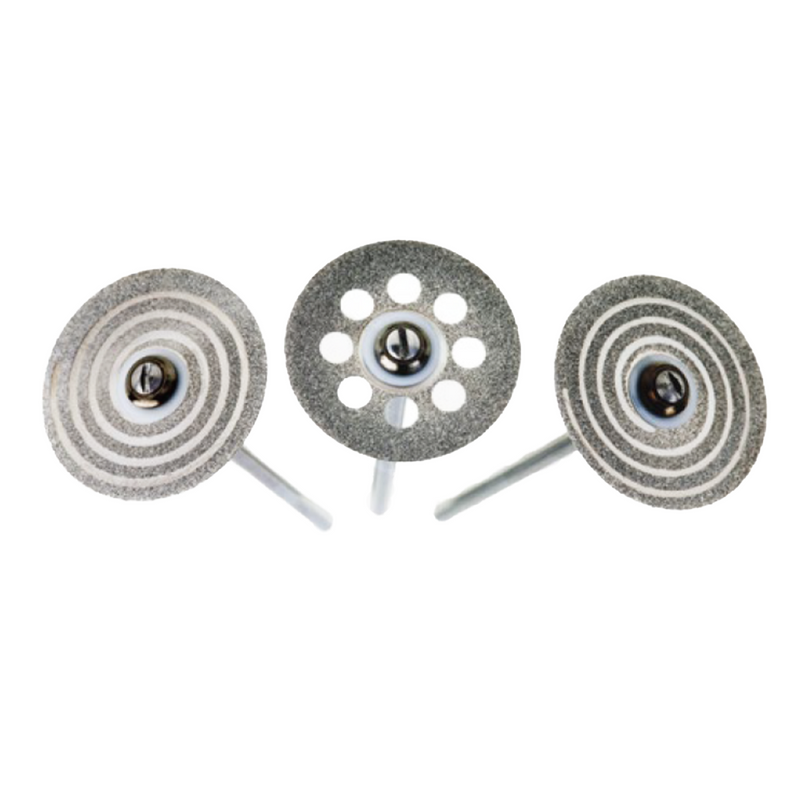
Dental lab diamond discs built for controlled cutting
Super Flex diamond discs from Eagle are dental diamond discs for fabricating, separating, contouring and shaping restorative materials in the dental lab. Every disc is factory mounted on a 2.35 mm HP (straight handpiece) shank mandrel to ensure concentricity, so it is ready to go into your lab handpiece or micromotor straight out of the pack. The discs are individually packed and color coded for quick identification at the bench, and they are Swiss made.
The range covers thin flexible separating discs, rigid general-purpose discs and a large 40 mm disc, in fine, medium and coarse grits, so one product page gives you a disc for most cutting jobs on the bench.
Which materials can you cut?
Super Flex discs are suited to temporary bridges, acrylic, ceramics, porcelain, metals and plaster. Typical lab tasks include:
- Separating units on temporary bridges and acrylic work
- Opening embrasures and shaping contours on ceramic and porcelain restorations
- Cutting and trimming metal parts
- Sectioning and trimming plaster
Choosing the right variant
The catalog number tells you what each disc is. The first group (350, 355, 358, 368, 379, 934) is the shape. The middle group is the diameter in tenths of a millimeter, so 220 is a 22 mm disc. The last group is the thickness in hundredths of a millimeter (017 = 0.17 mm), followed by the grit letter: F for fine, M for medium and C for coarse.
| Cat. No. | Diameter / thickness | Grit |
|---|---|---|
| D350-210-022F | 21 mm / 0.22 mm | Fine |
| D350-220-017F | 22 mm / 0.17 mm | Fine |
| D355-190-017F | 19 mm / 0.17 mm | Fine |
| D358-220-019C | 22 mm / 0.19 mm | Coarse |
| D379-220-017F | 22 mm / 0.17 mm | Fine |
| D379-220-022F | 22 mm / 0.22 mm | Fine |
| D934-220-017M | 22 mm / 0.17 mm | Medium |
| D368-400-028F | 40 mm / 0.28 mm | Fine |
As a rule of thumb, the 0.17 mm discs give a narrow cut for delicate separations and fine detail, while the 0.19 mm and 0.22 mm discs are stiffer for longer cuts and heavier material removal. The coarse D358 removes material fastest, the fine discs leave a smoother surface that needs less finishing, and the medium D934 sits between the two. The 40 mm D368 is the large-diameter option for deep cuts and model work; it is also available on its own as our plaster cutting disc.
Recommended speed and technique
The recommended speed is 20,000 RPM. At that speed, light and even pressure lets the diamond do the work without overheating the material or stressing the disc.
- Bring the disc up to speed before it touches the work.
- Keep the disc in one plane. Twisting or levering a thin disc in the cut can bend or break it.
- Use short, overlapping strokes instead of forcing one long cut; this keeps heat down on acrylic and temporaries.
- Pick a thicker disc when the cut is long or the material is hard, and a thinner one when access is tight.
- Steady your hands on the bench or model so the disc can't jump when it breaks through.
Safety at the bench
Any thin rotating disc can fracture if it is overloaded or bent. Always wear eye protection, work with dust extraction (ceramic, metal and plaster dust should not be inhaled), and keep your fingers out of the plane of the disc. Check each disc before use and discard any disc that is bent, chipped or cracked, or that wobbles when running.
Care and storage
After use, clean debris off the diamond surface with a soft brush so the grit keeps cutting freely. Return each disc to its individual pack so the thin edge isn't knocked or bent and the color coding stays easy to read. When a disc stops cutting cleanly or needs more pressure to do the same job, replace it rather than pushing harder.
Part of the Eagle lab range
Super Flex discs work alongside the carbide and diamond burs technicians use every day. Browse our full range of dental lab burs to complete your bench setup.
Ready to Subscribe?