EVERY ORDER SUPPORTS FAMILIES IN NEED



Dental Composite & Ceramic Brushes
Related products
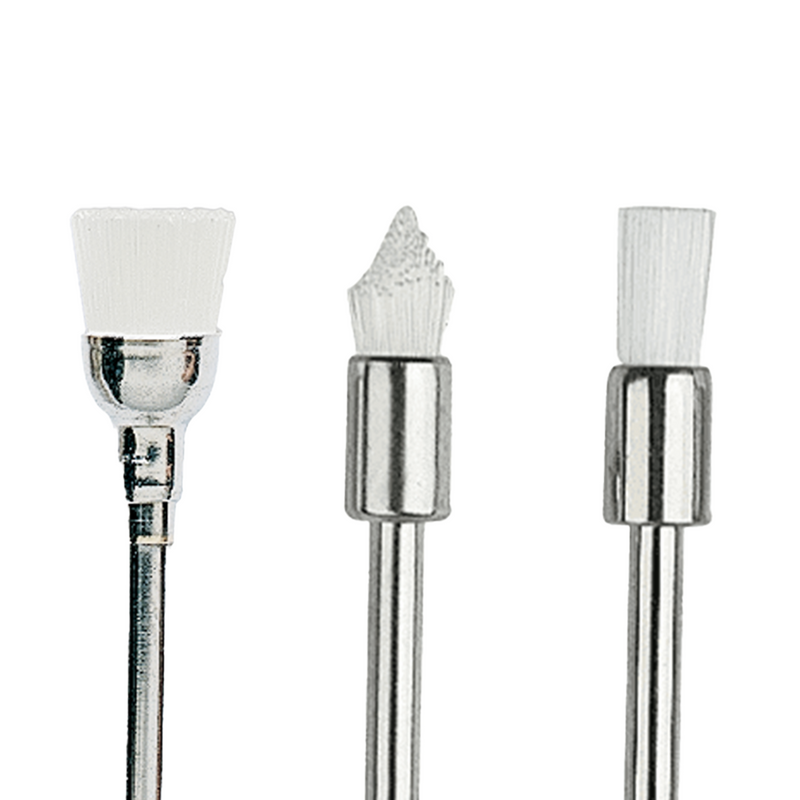
Dental Polishing Brushes for Composite and Ceramic Restorations
Eagle Dental Composite and Ceramic Brushes are latch-type (RA) polishing brushes for the final stage of finishing and polishing. The synthetic bristles are impregnated with abrasive particles, including diamond, silicon carbide and aluminum oxide, so the brush itself carries the abrasive. That lets the bristles follow the anatomy of the restoration and polish the areas that rubber cups, points and discs struggle to reach: occlusal grooves, fissures, embrasures and the transition zone at the margin.
They are used on composite fillings and on ceramic crowns, bridges and veneers. Each pack contains 12 brushes of one shape.
Which Brush Shape to Choose
| Option | Shape | Best for |
|---|---|---|
| ABRA541-060SF | Cup brush | Smooth and convex surfaces, buccal and lingual walls, larger restorations |
| ABRA542-040SF | Flame (pointed) brush | Occlusal fissures, grooves, cusp slopes and embrasures |
| ABRA544-040SF | Classic (straight) brush | Flat areas, marginal ridges and general polishing |
Many clinicians keep the cup and flame shapes side by side: the cup for broad surfaces and the flame for anatomy. The classic brush is a good all-round option if you prefer a single shape.
Where the Polishing Brush Fits in Your Workflow
A polishing brush is a finishing step, not a shaping tool. Contour and adjust the restoration first, then refine the surface with your usual finishing burs or rubber polishers, and use the brush last to bring up the gloss.
- Shape: establish anatomy and occlusion with finishing burs.
- Smooth: remove scratches with rubber or silicone polishers. You can compare options in our polishing burs range.
- Shine: finish with the abrasive brush to create a natural, light-reflecting surface.
How to Use the Brushes
- Mount the brush in a low-speed contra-angle handpiece.
- Work at low speed with light pressure. Let the abrasive bristles do the work; pressing hard splays the bristles and reduces control.
- Keep the brush moving across the surface instead of holding it in one spot, so you avoid heat build-up and uneven gloss.
- Use the tip of the flame brush in fissures and the rim of the cup brush along margins and convex surfaces.
- The abrasive is in the bristles, so paste is optional. If you like an extra step, a diamond polishing paste can be used for the final shine.
Composite vs Ceramic: What Changes
On composite, the brush is used after contouring and pre-polishing to give the resin surface a smooth, glossy finish that looks closer to natural enamel. It is especially useful on posterior composites, where occlusal anatomy makes cups and discs hard to use.
On ceramic restorations, the brush is useful after chairside adjustments to crowns, bridges and veneers, when you need to restore a smooth surface in grooves and around contact areas. Use the same light pressure and keep the brush moving.
Why Use an Abrasive-Impregnated Brush
- Reaches anatomy: flexible bristles follow grooves and fissures instead of flattening them.
- Fewer steps: the abrasive is built into the bristles, which simplifies the final polishing stage.
- Consistent results: controlled material removal for an even, natural-looking gloss.
- Durable: made for daily use in a busy practice when cleaned and maintained correctly.
Care and Maintenance
- Clean the brush after each use to remove composite and ceramic debris from between the bristles.
- Reprocess according to your practice protocol and the instructions supplied with the product.
- Replace the brush when the bristles are splayed, worn short or no longer produce a uniform shine.
- Store brushes dry and separated by shape so the bristles keep their form.
Common Mistakes to Avoid
- Using the brush to correct shape or occlusion. Adjust first, then polish.
- Running the brush too fast or pressing too hard, which splays the bristles and can overheat composite.
- Skipping the smoothing step. Deep scratches left by coarse instruments will still show after brushing.
Ordering Tips
Each pack holds 12 brushes of a single shape, so order one pack per shape you plan to use. If you polish many posterior composites, the flame brush is usually the one that runs out first. Eagle ships worldwide.
Ready to Subscribe?