EVERY ORDER SUPPORTS FAMILIES IN NEED



Round Burs with Neck
802-016
016
2.3
19
Related products
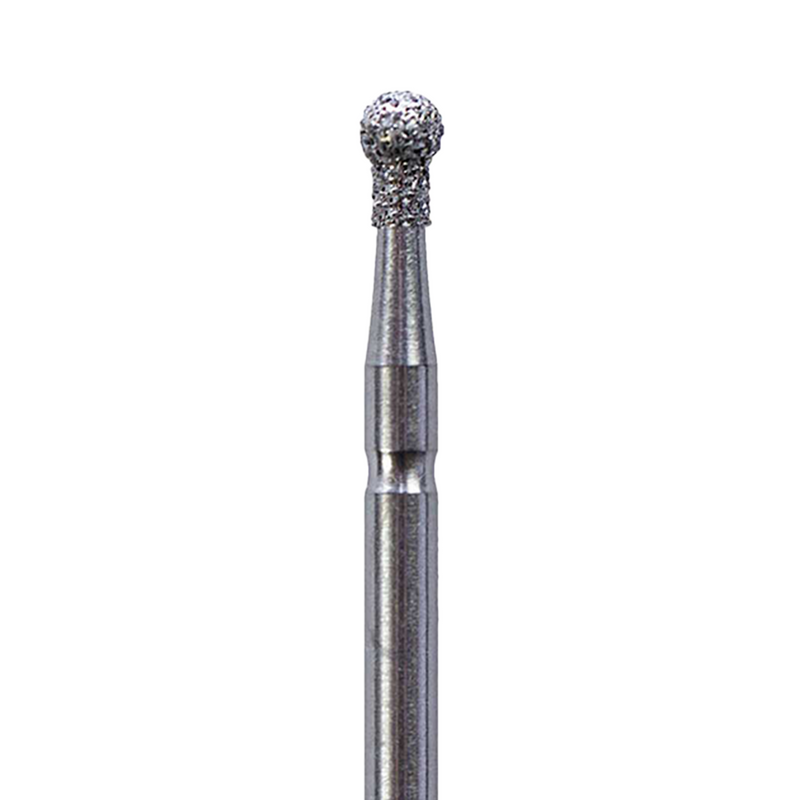
Round Burs with Neck: Long Neck Round Diamond Burs FG
Eagle Round Burs with Neck are FG diamond burs with a spherical head on a longer, thinner neck. The slim neck keeps the shank and handpiece head away from the tooth, so you see more of the cutting area and can reach deeper into a cavity or access opening. They are used for caries removal, cavity preparation and endodontic access. Each pack contains 5 burs, made in Israel.
Sizes and Grits
| Code | Head (ISO) | Grit |
|---|---|---|
| A125 | 016 (1.6 mm) | Coarse |
| A13 | 018 (1.8 mm) | Medium or coarse |
| A14 | 022 (2.2 mm) | Medium or coarse |
All three sizes share the ISO 002 round-head shape code and a total length of 19 mm. The diamond-coated head length is 2.3 mm on A125, 3.1 mm on A13 and 3.5 mm on A14.
What Each Size Is For
- A125 (016): the smallest head. Good for opening small or narrow carious lesions, working in pits and fissures and refining small access openings.
- A13 (018): the mid-size option and a practical everyday choice for posterior caries removal and outlining a cavity preparation.
- A14 (022): the largest head. Removes more tooth structure per pass for larger lesions and wider access cavities in molars.
Why a Neck Matters
On a standard round diamond bur the head sits close to the shank, so the shank and handpiece block part of your view, especially in second molars and deep preparations. A round bur with neck adds a slim extension behind the head. That gives you:
- A clearer line of sight to the cutting point
- More reach into deep cavities and the pulp chamber
- Less contact between the shank and the cavity walls or adjacent cusps
For shallow preparations where reach is not an issue, a standard round diamond bur does the job.
Clinical Uses
Caries removal and excavation
Use the round head to open the lesion and remove infected tissue, working from the center outward. The longer neck lets you follow caries under cusps while keeping the bur visible. Near the pulp, many clinicians switch to a slow-speed round carbide bur or hand excavator for the final layers.
Cavity preparation
Round burs with neck shape the initial outline and internal form of a preparation, particularly in posterior teeth and hard-to-reach areas where a standard bur would bring the handpiece into the way.
Endodontic access
Use a round bur with neck to make the first entry through enamel and dentin, then to unroof the pulp chamber and help locate the canal orifices. The extra reach and visibility help in molars with deep chambers. For the walls of the access cavity, follow up with a safe-ended bur such as our endo access diamond burs.
Coarse or Medium Grit
Coarse grit removes enamel, old restorations and dentin faster and suits the first entry. Medium grit cuts more slowly, leaves a smoother surface and gives more control near the final outline. A common approach is to open with coarse and finish the internal form with medium in the same head size.
Speed, Water and Technique
- Use in a high-speed handpiece with water spray to cool the tooth and clear debris from the diamond.
- Apply light, intermittent pressure and let the diamond cut; pressing harder only adds heat.
- Keep the bur moving in short brush strokes rather than holding it in one spot.
- Because the neck is thinner than the shank, avoid levering or prying with the bur, and don't bend it.
- Check the bur is fully seated in the chuck before use.
Care and Sterilization
After use, clean the head with a bur brush or ultrasonic bath to remove dentin and debris, rinse and dry, then sterilize according to your practice protocol. Store burs in a bur block so the diamond heads don't touch. Replace a bur when cutting slows, the diamond looks worn or the neck is bent.
Ready to Subscribe?