EVERY ORDER SUPPORTS FAMILIES IN NEED



Occlusal Finishers
901R-026
026
1.1
19
Related products
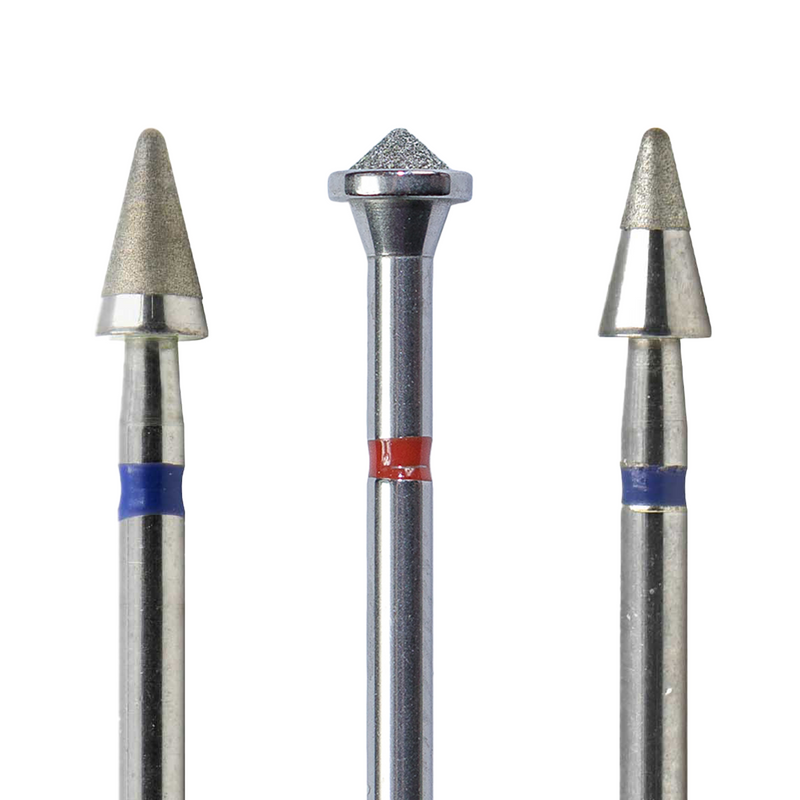
OccluFinishers: Occlusal Finishing Burs for Composite
OccluFinishers by Eagle Dental are acorn burs: acorn-shaped FG diamond burs for sculpting and finishing the occlusal surface of composite restorations. Their key feature is a diamond-free safe edge that acts as a depth limit, so you can carve occlusal anatomy, cusps and fissures without over-sculpting the restoration or damaging the surrounding enamel. They are made in Israel.
Each pack contains 5 burs of one profile.
Choose Your Profile
| Option | Grit | Use |
|---|---|---|
| PR261, PR262, PR151 | Fine | Carving primary contours, cusps and fissures |
| K303, K305 | Extra-extra-fine (XXF) | Refining and smoothing occlusal anatomy |
| OccluFinishers Kit | Multi-profile set | A combined set for the full occlusal workflow |
A simple approach is to carve with a fine-grit profile and refine with an XXF profile of similar size.
What Each Variant Is For
- PR261, PR262 and PR151 (fine): the carving profiles. Use them to open the central fissure, define the cusp inclines and remove the small overfill left after curing.
- K303 and K305 (XXF): the refining profiles. Use them after carving to smooth the grooves and inclines and to prepare the surface for polishing.
- OccluFinishers Kit: fine and XXF profiles together, for clinicians who want the complete carve-and-refine sequence on one tray.
Why Occlusal Anatomy Matters
A flat occlusal surface on a posterior composite looks artificial and can change how the teeth meet. Well-defined cusps, inclines and fissures help restore function, guide the bite and give the restoration a natural appearance. Carving that anatomy by hand with a standard diamond is slow and easy to overdo, which is the problem the OccluFinisher design addresses.
How the Safe Edge Works
A conventional diamond bur cuts everywhere on its head. Extra pressure or a small change of angle cuts deeper than planned, and on an occlusal surface that can flatten anatomy or create a ledge at the enamel margin. The OccluFinisher has a diamond-free safe edge that limits the cutting depth. That makes occlusal carving more predictable and repeatable, protects the enamel and helps you avoid damaging the neighboring tooth.
Occlusal Sculpting Workflow
- Build up: place the composite with only a slight overfill and cure.
- Carve: establish the primary contours and fissures with a fine-grit acorn-shaped profile and generous water irrigation.
- Refine: switch to an extra-extra-fine profile to smooth the anatomy.
- Check the bite: verify the occlusion with articulating paper and adjust where needed.
- Polish: finish with your preferred polishing system.
Because the slight overfill needs only minimal removal, the carving step stays short and controlled. OccluFinishers are well suited to clinicians placing their first posterior composites, where they make it easy to establish the primary occlusal contours.
Speed and Water
OccluFinishers have an FG shank for a high-speed handpiece. Run them with water spray: composite heats quickly under a diamond, and water keeps the surface cool, clears debris from the diamond and lets you see the anatomy you are carving. Many clinicians lower the speed for the XXF refining step, where control matters more than cutting efficiency. Follow your handpiece and practice guidelines for the exact speed.
Single Packs or the Kit?
If you already know the profile that suits most of your restorations, single packs of 5 let you stock exactly what you use. If you are new to occlusal finishing burs, or want both fine and extra-extra-fine profiles at hand, the OccluFinishers Kit brings the profiles together in one set so you can find your preferred shapes before reordering single packs.
Technique Tips
- Use generous water irrigation while carving.
- Let the acorn shape follow the natural inclines of the cusps; work from the cusp tip toward the central fissure.
- Use light pressure. The safe edge limits depth, but light pressure gives you the best control and surface quality.
- Keep the bur moving; holding it in one spot can leave a dip in the composite.
- Check the occlusion before polishing, so you only polish the final surface once.
Occlusal Finishing vs Occlusal Reduction
OccluFinishers are for sculpting and finishing the occlusal anatomy of a composite restoration. They are not depth-cutting burs for crown preparation. If you need controlled occlusal reduction when preparing a tooth for a crown or onlay, see the Occlusal Reduction Burs.
Sculpting vs Polishing
OccluFinishers set the shape; they do not replace polishing. After carving and refining, polish the restoration for a lasting shine. For the buccal, lingual and proximal surfaces of the same restoration, the XXF and shine burs in our Composite Finishing Burs range complete the finishing sequence.
Care and Sterilization
Remove composite debris after each use with a bur brush or an ultrasonic bath, rinse and dry, then sterilize according to your practice protocol. Store the burs in a bur block so the diamond surfaces don't touch. Replace a bur when it no longer cuts evenly or the safe edge shows damage.
Ready to Subscribe?